
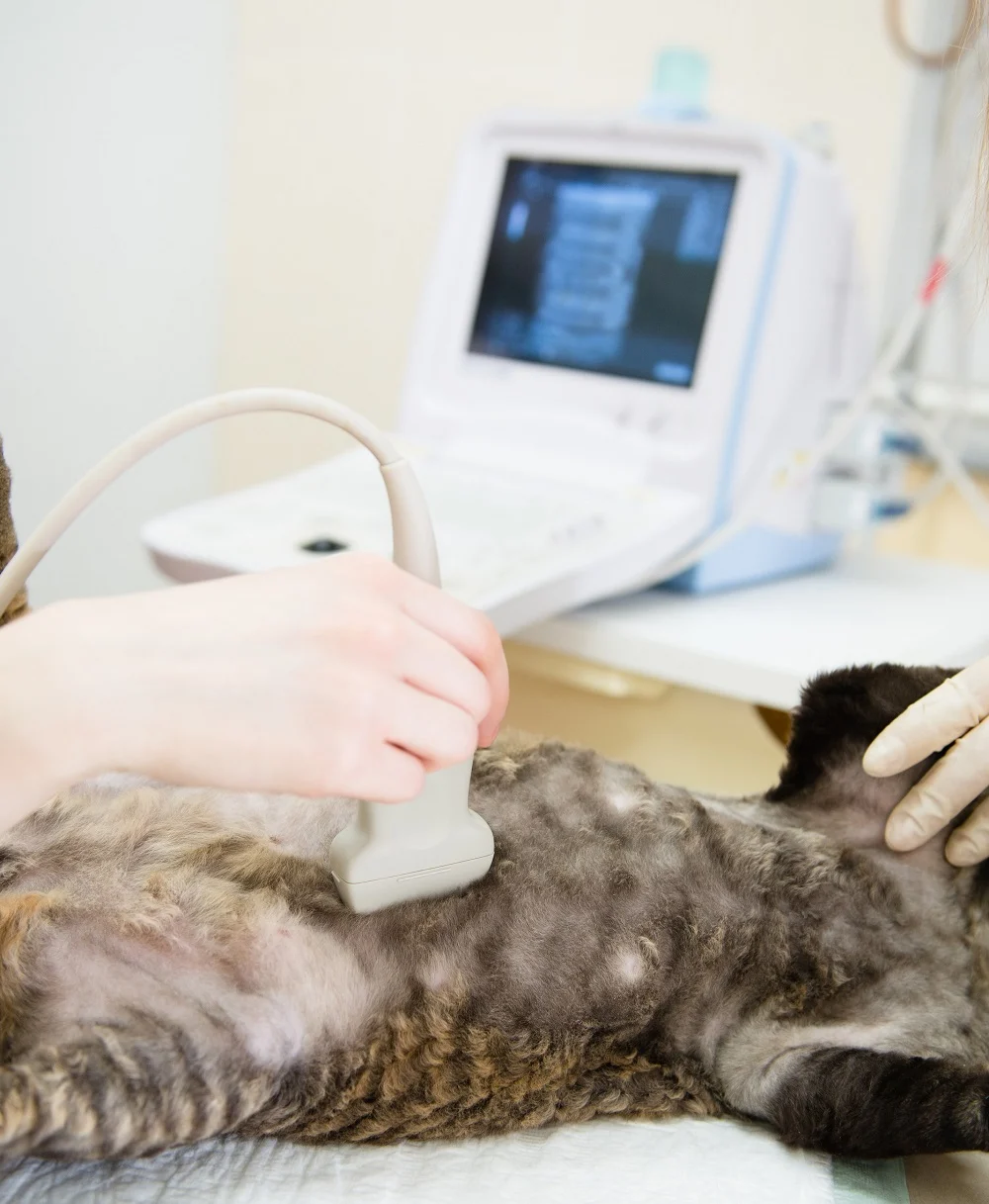
A Clear View Inside Your Pet, Without Radiation
When your pet is sick, every hour counts. At United Veterinary Center in Norwalk, CT , ultrasound lets our veterinarians look inside your dog, cat or small pet in real time. This quick, painless exam uses sound waves instead of radiation, so we can find the problem sooner and get your companion back to feeling like themselves.
Book OnlineHow Veterinary Ultrasound Works
Ultrasound sends harmless, high-frequency sound waves into the body. The echoes that bounce back create a live image on a monitor. Because the image moves in real time, our team can watch organs and tissues as they work. We can see their size, shape and texture and spot changes that an exam alone cannot show.
Ultrasound adds to the other tools in our onsite diagnostics suite. Advanced digital X-rays work best for bones, the overall outline of organs, and finding swallowed objects. Ultrasound shows the inner structure of soft tissues. Together with results from our in-house laboratory services, these tools often give us answers during the same visit.
What We Can Evaluate With Ultrasound
- Liver, gallbladder and spleen
- Kidneys, bladder and urinary tract, including bladder stones
- Stomach and intestines, including thickened walls or blockages
- Adrenal glands and lymph nodes
- Masses or fluid in the abdomen or chest
- Reproductive organs and pregnancy
When Your Veterinarian May Recommend an Ultrasound
We often recommend ultrasound when bloodwork or a physical exam points to a problem that needs a closer look. Common reasons include:
- Vomiting, diarrhea or appetite loss that won’t go away
- Unexplained weight loss
- Abnormal liver or kidney values on lab work
- Changes in drinking or urination
- A belly that looks swollen or painful
- Lumps or masses felt during an exam
Ultrasound is especially helpful when we manage chronic illness, such as kidney disease in pets and diabetes in pets. Follow-up scans help us track changes over time and adjust treatment.
What to Expect During Your Pet’s Scan
Most pets handle ultrasound very well. We may clip a small patch of fur so the probe makes good contact with the skin. Then we apply a warm gel and gently move the probe over the area. Most pets stay awake and simply lie comfortably while our team holds and reassures them. Nervous or wiggly pets may need light sedation. For an abdominal scan, we may ask you to withhold food for several hours beforehand so gas in the stomach doesn’t block the view. We’ll give you clear instructions when you book.
From Answers to Treatment
The images guide what happens next. In some cases, ultrasound helps us plan pet surgery or collect samples more safely. In others, it confirms that a change in diet or medication is the right choice. We explain the findings in plain language and walk you through every option.
We provide ultrasound for our patients across dog care, cat care and pocket pet care. Ultrasound works best alongside regular wellness exams and preventative care, which help us catch problems early. New to our hospital? Visit our new clients page to get started.
Pet Ultrasound FAQs
Is ultrasound safe for my pet?
Yes. Ultrasound uses sound waves, not radiation, so it is safe to repeat when needed. It is non-invasive and painless for most pets.
Will my pet need to be sedated?
Most pets don’t need sedation. They lie quietly while our team holds them. If your pet is very anxious or in pain, your veterinarian may suggest light sedation to keep them comfortable and help us get clear images.
Does my pet need to fast before an ultrasound?
For abdominal scans, we usually ask you to withhold food for several hours beforehand. Food and gas in the stomach can block the view. Our team will give you specific instructions when you schedule.
Why will you shave my pet’s fur?
Fur traps air, and air blocks sound waves. Clipping a small area lets the probe touch the skin directly so we get the clearest picture. The fur grows back normally.
What is the difference between an ultrasound and an X-ray?
X-rays work well for bones, the overall size and outline of organs, and many swallowed objects. Ultrasound shows the inside of soft tissues and organs in real time. We often use both to get the full picture.
How long does a pet ultrasound take?
Most scans take about 30 minutes to an hour, depending on the area we examine and how relaxed your pet is. We will let you know what to expect for your pet’s visit.
When will I get the results?
Because ultrasound images appear in real time, your veterinarian can often share first findings soon after the scan. If we need more tests or a specialist’s opinion, we will explain the next steps and timeline.
Get Answers for Your Pet Sooner
If your pet isn’t feeling well, don’t wait and wonder. Our team at United Veterinary Center uses ultrasound and our full range of diagnostics to find the cause and start treatment quickly. Call (203) 957-3375 or request a visit online.