
Healthy Teeth Help Your Pet Live a Longer, More Comfortable Life
Dental care is vital to your pet’s overall health. About 80 percent of dogs and 70 percent of cats over three years old have some form of dental disease, which makes it the most common health problem we see in pets. Untreated infection in the mouth can enter the bloodstream and affect the heart, liver and kidneys. At United Veterinary Center in Norwalk, CT , we offer thorough dental exams, professional cleanings, digital dental X-rays and extractions to keep your dog or cat comfortable and free of pain.
Book OnlineWhy Pet Dental Care Matters
Pets rarely show that their mouth hurts. Many dogs and cats keep eating with broken teeth, infected roots or inflamed gums, so problems often go unnoticed until they are advanced. Plaque hardens into tartar, bacteria spread below the gumline and the tissue holding each tooth in place slowly breaks down. This process is called periodontal disease. You can learn more about how it develops and progresses on our pet dental disease page.
Bacteria from an infected mouth can travel through the bloodstream and strain the major organs. This is a particular concern for senior pets and for pets already living with conditions such as kidney disease or diabetes. Regular dental care is one of the simplest ways to protect your pet’s long-term health, and it is a core part of our preventative care approach.
Signs Your Pet May Need a Dental Visit
- Bad breath that does not go away
- Yellow or brown tartar buildup on the teeth
- Red, swollen or bleeding gums
- Loose, broken or missing teeth
- Chewing on one side of the mouth or dropping food
- Pawing at the face or rubbing the mouth on furniture
- Drooling, decreased appetite or reluctance to play with chew toys
- Swelling below the eye, which can point to a tooth root abscess
Dental Exams at Every Wellness Visit
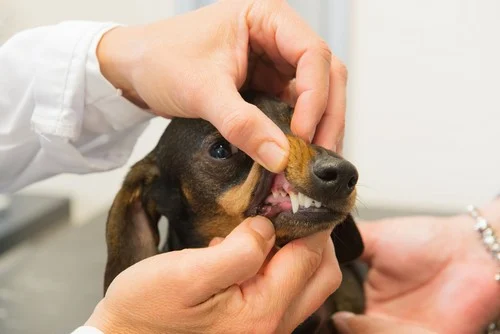
We check your pet’s teeth and gums during every one of our wellness exams. We look for tartar, gum recession, fractured teeth, oral masses and signs of pain. If we find a problem, we explain what we see and recommend a treatment plan that fits your pet’s needs.
What Happens During a Professional Dental Cleaning
A thorough dental cleaning is done under general anesthesia. This lets us clean below the gumline, where most dental disease hides, safely and without causing your pet stress. Before the procedure, we run pre-anesthetic bloodwork through our in-house laboratory to confirm that your pet is a good candidate for anesthesia. During the cleaning, a team member monitors your pet’s vital signs at all times.
A typical dental procedure includes:
- A complete oral exam and charting of every tooth
- Scaling to remove plaque and tartar above and below the gumline
- Polishing to smooth the tooth surface and slow new plaque buildup
- Digital dental X-rays to evaluate the roots and jawbone
- Treatment of diseased teeth, including extractions when needed
Dental X-Rays and Extractions
More than half of each tooth sits below the gumline, so a visual exam cannot show the whole picture. Our advanced digital X-rays reveal root infections, bone loss and hidden fractures. When a tooth is too damaged to save, removing it relieves pain and stops infection from spreading. Our veterinarians perform extractions and other oral procedures as part of our surgical services, with pain management and clear home care instructions afterward.
Dental Care for Dogs, Cats and Exotic Pets
Small breed dogs are prone to crowded teeth and early tartar. Cats often develop painful tooth resorption and gum inflammation. Our dog care and cat care services include dental exams tailored to each species. Rabbits, guinea pigs and chinchillas have teeth that grow throughout life and can become overgrown, so we also offer dental checks through our pocket pet and exotic animal services.
Keeping Your Pet’s Teeth Healthy at Home
Professional cleanings work best alongside daily home care. Brushing your pet’s teeth with a pet-safe toothpaste is the most effective way to slow plaque buildup. Dental chews, water additives and dental diets can also help. Our team is happy to show you how to brush your pet’s teeth and recommend products that suit your pet. If you are new to our practice, visit our new clients page to get started. Flexible payment options are available through Cherry.
Pet Dental Care FAQs
How often does my pet need a dental cleaning?
Most dogs and cats benefit from a professional cleaning about once a year, but some pets need them more often. Small breed dogs and pets with a history of dental disease may need cleanings more frequently. We will recommend a schedule based on your pet’s dental exam.
Why does my pet need anesthesia for a dental cleaning?
Anesthesia allows us to clean below the gumline, take dental X-rays and treat painful teeth safely. A pet that is awake cannot hold still for these steps. Anesthesia-free cleanings only remove visible tartar and miss the disease hiding under the gums.
Is anesthesia safe for older pets?
Age alone is not a reason to avoid dental care. We run pre-anesthetic bloodwork, tailor the anesthesia plan to your pet and monitor vital signs throughout the procedure. Leaving dental disease untreated can be harder on an older pet than a carefully managed cleaning.
Will my pet be in pain after a dental procedure?
We use pain management before, during and after dental procedures. Most pets go home the same day and feel better within a few days, especially once painful teeth have been treated. We send you home with clear instructions and any medications your pet needs.
Can my pet eat normally after tooth extractions?
Many pets eat well after extractions, even when several teeth have been removed. We may recommend soft food for a short time while the gums heal. Pets often eat better afterward because the source of their pain is gone.
What is the best way to care for my pet’s teeth at home?
Daily brushing with a pet-safe toothpaste is the most effective home care. Never use human toothpaste, because some ingredients are toxic to pets. Dental chews and dental diets can add extra protection between professional cleanings.
Do rabbits and other small pets need dental care?
Yes. Rabbits, guinea pigs and chinchillas have teeth that grow continuously and can become overgrown or misaligned. Watch for drooling, weight loss or a change in eating habits, and bring your pet in for a dental check if you notice these signs.
Give Your Pet a Healthier, Pain-Free Smile
Bad breath, tartar or changes in eating habits are signs that your pet’s mouth needs attention. Call United Veterinary Center at (203) 957-3375 or request an appointment online to schedule a dental exam for your dog, cat or exotic pet in Norwalk, CT .