
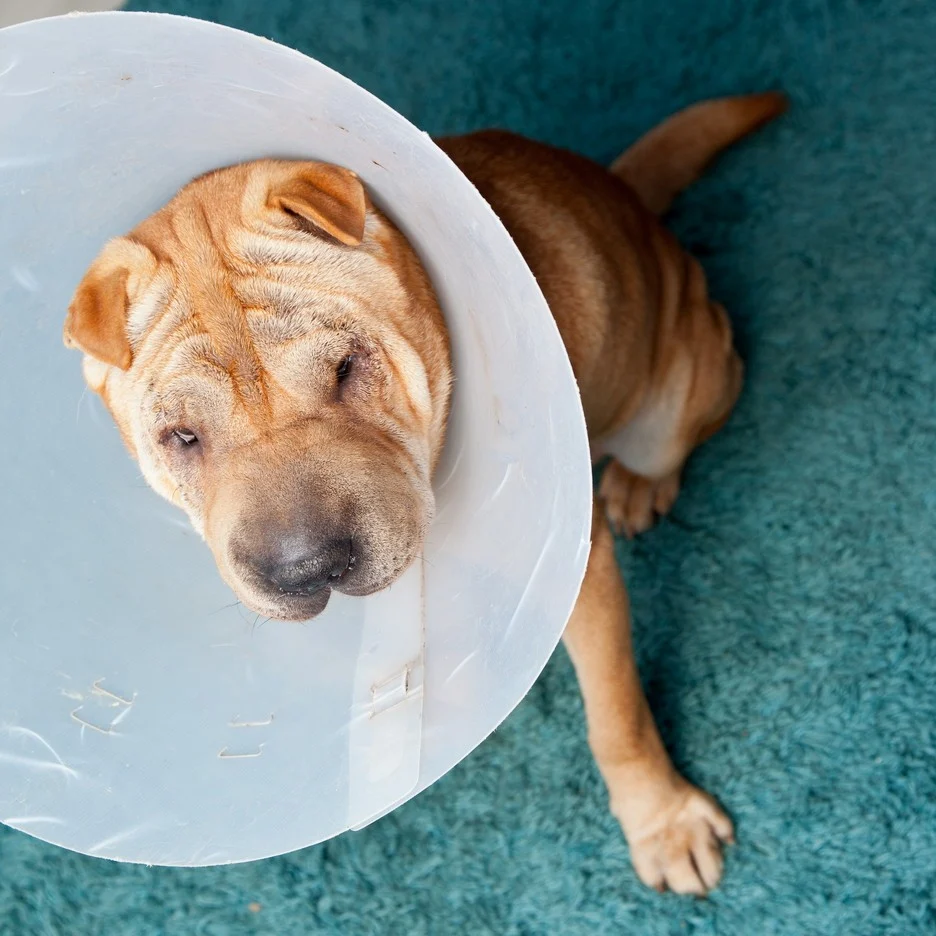
Helping Your Dog Get Back on All Four Paws
A sudden limp, a hind leg held off the ground, or trouble getting up after a nap can all point to a torn cruciate ligament, one of the most common causes of back-leg lameness in dogs. At United Veterinary Center in Norwalk, CT , we examine the knee, confirm the injury with in-house imaging, and build a treatment plan that relieves pain, restores stability, and protects your dog’s joints for the years ahead.
Book OnlineWhat Is a Cruciate Ligament Tear?
The cranial cruciate ligament (CCL) in dogs is the same structure people know as the ACL. It runs inside the knee (stifle) joint and keeps the shin bone from sliding forward beneath the thigh bone. When the ligament partially or completely tears, the knee becomes unstable. Every step then causes pain, inflammation, and wear on the cartilage.
In people, an ACL tear is usually a sports injury. In dogs, the ligament more often weakens gradually over months or years and then gives way during ordinary activity, such as jumping off the couch, chasing a ball, or turning quickly in the yard. Cats can tear the ligament too, though it is far less common and usually follows trauma. Our cat care team checks for it in any cat with sudden hind-limb lameness.
Signs Your Pet May Have a Torn Cruciate Ligament
Some dogs show dramatic lameness right away. Others have a subtle limp that comes and goes. Watch for:
- Limping or toe-touching on one back leg, especially after exercise
- Sitting with one hind leg kicked out to the side instead of tucked under
- Stiffness when getting up after rest
- Reluctance to jump into the car, climb stairs, or play
- Swelling or thickening on the inside of the knee
- Muscle loss in the affected thigh
- A clicking sound when walking, which can signal meniscus damage
Many dogs that tear one cruciate ligament eventually tear the other. Early diagnosis and good weight management make a real difference for both knees.
Who Is at Risk?
Any dog can tear a cruciate ligament, but the risk is higher in large and giant breeds such as Labrador Retrievers, Rottweilers, Newfoundlands, and German Shepherds. Small active breeds are also affected. Extra body weight places constant strain on the ligament, so pet obesity is one of the biggest risk factors we can actually change. Dogs that are weekend warriors, inactive during the week and very active on weekends, also face a higher chance of injury.
How We Diagnose Cruciate Ligament Injuries
Diagnosis starts with a thorough orthopedic exam. Your veterinarian watches your dog walk, feels the knee for swelling and pain, and performs gentle tests that check for the abnormal forward movement a torn ligament allows. Some dogs need light sedation to relax the leg muscles for an accurate exam.
We then use advanced digital X-rays to look for joint fluid, early arthritis, and bone changes and to rule out fractures or bone tumors. Our onsite diagnostics and laboratory services let us run pre-anesthetic bloodwork the same day, so we can move quickly if surgery is recommended. When a soft-tissue view would help, ultrasound can give additional detail.
Treatment Options
The right treatment depends on your dog’s size, age, activity level, overall health, and whether the tear is partial or complete.
Surgical repair. For most medium and large dogs, surgery offers the best chance of a stable, comfortable knee. Common approaches include the lateral suture (extracapsular) technique and procedures that change the angles of the knee, such as TPLO or TTA. Our veterinary surgery team will explain which option fits your dog. When an advanced bone-cutting procedure is the best choice, we will coordinate referral to a board-certified surgeon and handle the follow-up care here at home.
Conservative management. Some small dogs, cats, and pets that are not good candidates for anesthesia can improve with strict rest, controlled leash walks, pain and anti-inflammatory medication, weight loss, joint supplements, and a gradual return to activity. This approach takes patience, and the knee may stay less stable than it would after surgery.
Recovery and Long-Term Joint Health
Most dogs need 8 to 16 weeks of restricted activity after surgery, with short leash walks that lengthen over time. We schedule recheck visits and follow-up X-rays to confirm healing and give you clear at-home guidance on pain control, incision care, and safe exercises.
Even with excellent treatment, an injured knee is more likely to develop arthritis over time. Regular wellness exams, a lean body weight, and a solid preventative care plan help keep your dog moving comfortably. You can learn more about how we support large and small breeds on our dog care page, or browse other orthopedic and medical issues on our conditions we treat page.
Cruciate Ligament Tear FAQs
Is a torn cruciate ligament an emergency?
It is not usually life-threatening, but it is painful and should be examined promptly. If your dog suddenly cannot bear weight on a back leg, call us the same day so we can manage pain and keep further damage, such as a torn meniscus, from developing.
Can a cruciate ligament tear heal on its own?
The ligament itself does not heal back together. Scar tissue can stabilize the knee somewhat over several months, which is why small pets sometimes improve with rest and medication. Larger dogs usually stay unstable and develop arthritis faster without surgical repair.
How do you know if my dog’s tear is partial or complete?
A complete tear usually causes obvious knee instability on the orthopedic exam. Partial tears can be harder to detect, so we combine the physical exam, sedation when needed, and digital X-rays showing joint swelling or early arthritis to reach a diagnosis.
Which surgery is best for a torn cruciate ligament?
It depends on your dog’s size, age, activity level, and knee anatomy. Lateral suture repair often works well for smaller dogs, while TPLO or TTA procedures are commonly recommended for large, active dogs. Your veterinarian will walk you through the pros and cons of each option.
How long is recovery after cruciate surgery?
Most dogs begin using the leg within a few weeks, but full recovery generally takes 8 to 16 weeks of controlled, gradually increasing activity. Following the exercise restrictions closely is the most important thing you can do for a good result.
Will my dog tear the ligament in the other knee?
Many dogs that tear one cruciate ligament later tear the other, often within a year or two. Keeping your dog lean, building muscle with steady daily exercise, and avoiding sudden bursts of intense activity can help lower the risk.
Can I help prevent cruciate ligament injuries?
Maintaining a healthy weight is the most effective step. Regular moderate exercise, rather than occasional intense play, keeps supporting muscles strong. Routine wellness exams also let us catch subtle lameness or joint changes early.
Don’t Let a Limp Slow Your Dog Down
If your pet is favoring a back leg, the sooner we examine the knee, the more options you’ll have. Call United Veterinary Center at (203) 957-3375 or request an appointment online. New to our hospital? Visit our new clients page to get started.